For most business owners, growth is the assumed objective: more revenue, more employees, more locations, more market share. We equate size with success so automatically that questioning growth can sound like questioning ambition. But size and success aren’t the same thing.
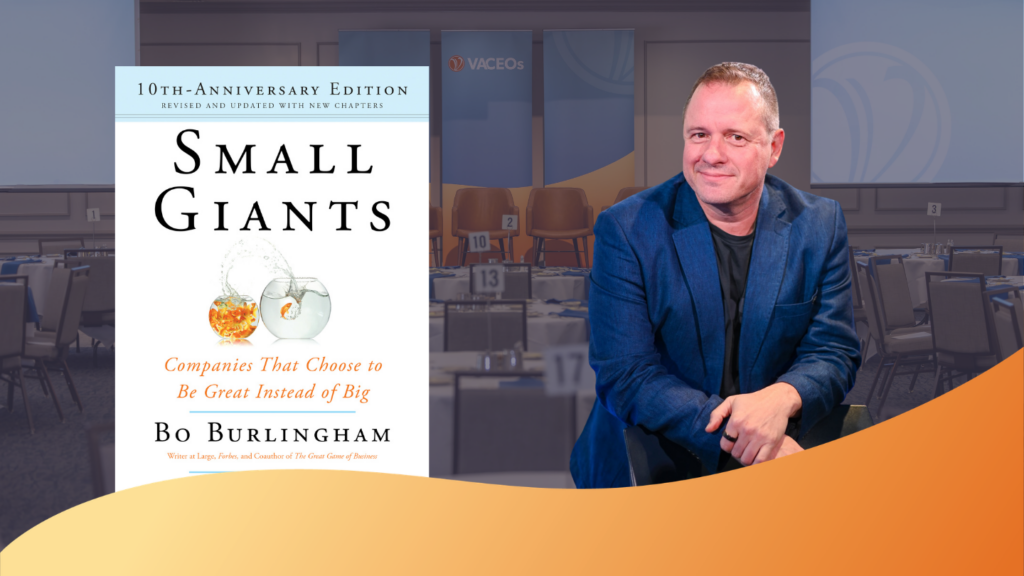
In Small Giants: Companies That Choose to Be Great Instead of Big, business journalist Bo Burlingham profiled companies that chose not to pursue growth at all costs. They were ambitious. They were just particular about what they were building.
That matters when an opportunity looks unquestionably good on paper. A new market opens, a large customer comes calling, an acquisition becomes possible or capital is available to expand. The natural question is, “How big could this become?” A more useful one is, “Will getting bigger make us better?”
Growth Comes With Trade-Offs
Every meaningful growth opportunity changes something besides revenue. It may require another layer of management, change the CEO’s job, strain the culture or make customer relationships less personal. Those trade-offs may be well worth making, but they are still trade-offs.
That’s why growth is better understood as a strategy than a destination. For one company, doubling in size may create opportunity for employees, strengthen the balance sheet and let the business serve customers in new ways. For another, the better move may be to improve margins, deepen expertise, strengthen the leadership team or become indispensable to a narrower group of customers.
The harder part is deciding what “better” means before the next opportunity arrives. Revenue and headcount make a convenient scoreboard, but other measures take more thought. How dependent is the company on its founder? Are good people finding reasons to stay? Are customers getting more value? Does growth give the company more freedom or less? Is the business becoming more durable?
The point is to choose the scoreboard on purpose.
How Big Is Big Enough?
Before saying yes to a major opportunity, a CEO might ask: What gets better if we do this? What gets harder? What aren’t we willing to trade away? And perhaps the most revealing question: Would we still want this opportunity if it didn’t make the company look bigger?
The answers don’t necessarily argue for restraint. Sometimes they make the case for moving faster. They simply force growth to compete against a clearer definition of success.
Opportunities are flattering, and saying yes feels ambitious. Sometimes the more ambitious choice is knowing what you’re building well enough to say no. AI and automation make that calculus even more interesting by changing what a relatively small organization can accomplish. The question isn’t only how to scale. It’s what actually needs to scale.
Join the Conversation
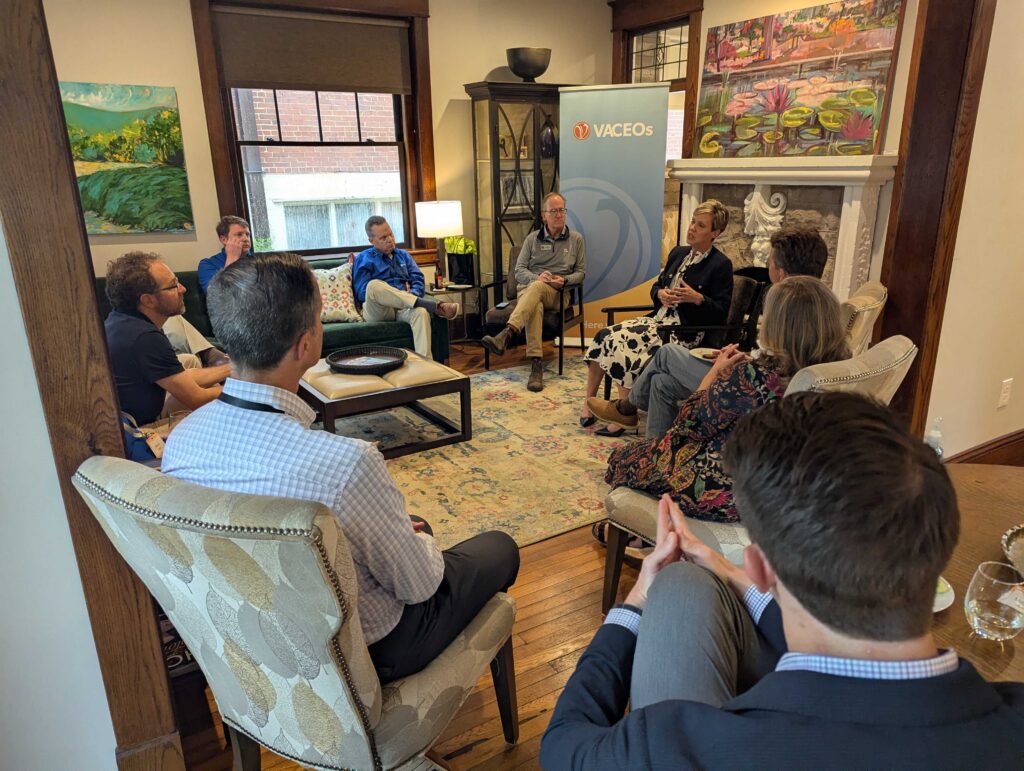
We’ll take this up at our November 18 Quarterly Luncheon with Jean Moncrieff and a panel of Virginia CEOs. They’ll discuss when scale creates opportunity, what gets harder as a company expands, what is worth protecting and how to recognize an opportunity that doesn’t fit.
It’s a natural topic for VACEOs. The organization was founded around leaders continuing to learn, grow and share their experiences with one another, an idea that remains central to our mission.
Smaller isn’t the point, and neither is bigger. The CEO’s job is deciding what better means.
VACEOs members and sponsors can register here for the November 18 Quarterly Luncheon. Not a member yet? If you’re a CEO interested in this conversation and curious about VACEOs, contact Scot McRoberts to learn more and request an invitation.