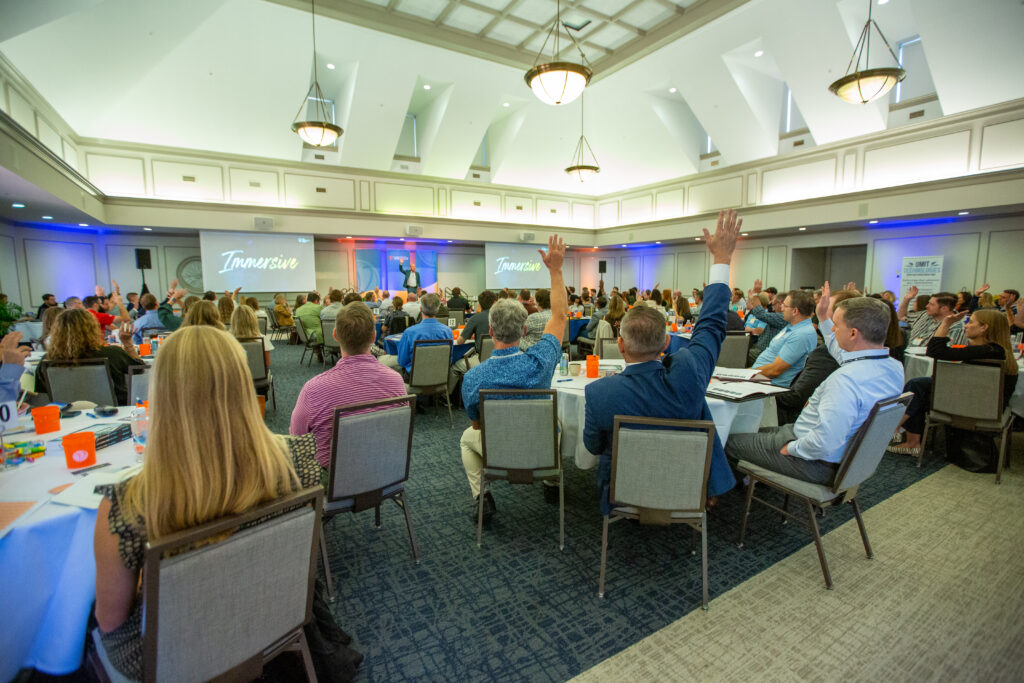
At Virginia CEOs, we spend a lot of time talking about growth, strategy, leadership, and execution. At our Fall Leaders Conference, customer experience expert Dan Gingiss helped CEOs and their teams look at those priorities through a different lens: What makes a customer remember a company, tell someone else about it, and ultimately come back?
The workshop explored Dan’s WISER Framework: Witty, Immersive, Shareable, Extraordinary, and Responsive. Members from construction, technology, healthcare, professional services, nonprofits, and other industries generated dozens of ideas for creating experiences customers genuinely value and talk about.
Many of those ideas were remarkably simple. Some involved changing just a sentence or two in an email. Others focused on keeping customers informed, recognizing an important milestone, or simply showing that a real person is paying attention.
Customers Want More Humanity
A recurring theme was the opportunity to sound more human. Participants looked at everyday customer touchpoints including automated emails, invoices, voicemail greetings, signage, and out-of-office messages. Each is a chance to add some personality and make a stronger connection.
Take an invoice. It has a practical job to do, but it doesn’t have to feel cold and transactional. A short note of appreciation or a little personality can make an otherwise forgettable interaction feel different. The same thinking can apply to welcome emails, appointment reminders, project updates, and other routine communications.
It raises a useful question for any business: Do the messages your customers receive sound like they came from actual people?
Make the Invisible Visible
Customers don’t always need a process to move faster. They do need to know what’s happening. Across industries, attendees discussed ways to give customers a clearer view of progress and what comes next. Ideas included project trackers, visual journey maps, milestone updates, and proactive communication during stretches when little appears to be happening.
Think about a customer waiting on permits, approvals, parts, or paperwork. From inside the company, plenty may be happening. From the customer’s perspective, there may be nothing but silence. A simple update that says,“We’re still working on it, and here’s what comes next,” can make a real difference.
Waiting isn’t always the problem. Not knowing what’s happening often is.
Make It Personal and Shareable
What makes someone want to share an experience with someone else? Much of the conversation centered on personal attention: handwritten notes, personalized gifts, milestone celebrations, before-and-after photos, and small rituals that mark the completion of a project or an important moment for the customer.
One especially practical suggestion was to put the customer in the photo. A completed-project photo featuring the customer tells a different story than a photo of the project by itself. Send that photo to the customer and they have something personal to keep or share. Send it again on the customer’s one-year anniversary and you’ve created another natural reason to reconnect.
It’s a small shift, but it changes the focus from“Look what we built” to“Look what we accomplished together.”
Don’t Make the Customer Ask
Proactive communication came up again and again. During onboarding, delivery, maintenance, implementation, or any other process with a waiting period, customers want to know someone is paying attention.
One of the simplest examples discussed during the workshop was the “We haven’t forgotten you” update. There may be no major news to report. The timeline may not have changed. You may still be waiting on something outside your control. But telling a customer where things stand, what you’re waiting for, and when they can expect to hear from you again can prevent uncertainty from turning into frustration.
It also saves the customer from having to ask,“What’s going on?”
Start With What Customers Already See
Improving customer experience doesn’t have to begin with a new initiative, new software, or a big budget. Start with what already exists. Look at the first five messages a customer receives from your company. Read your invoices. Listen to your voicemail greeting. Walk through your onboarding process from the customer’s point of view.
Where might someone wonder what happens next? Where does your communication sound more administrative than human? Where is there an accomplishment or milestone worth recognizing?
Pick one of those moments and improve it. Make it clearer, more personal, or more reassuring. Extraordinary customer experience doesn’t always require a grand gesture. Sometimes it starts with showing customers that a real person is paying attention.
Thank you to everyone who joined us for the Fall Leaders Conference and contributed ideas, experiences, and questions to the conversation. If you’re a CEO or business owner looking for opportunities to learn and grow alongside other leaders, learn more about Virginia CEOs membership.