
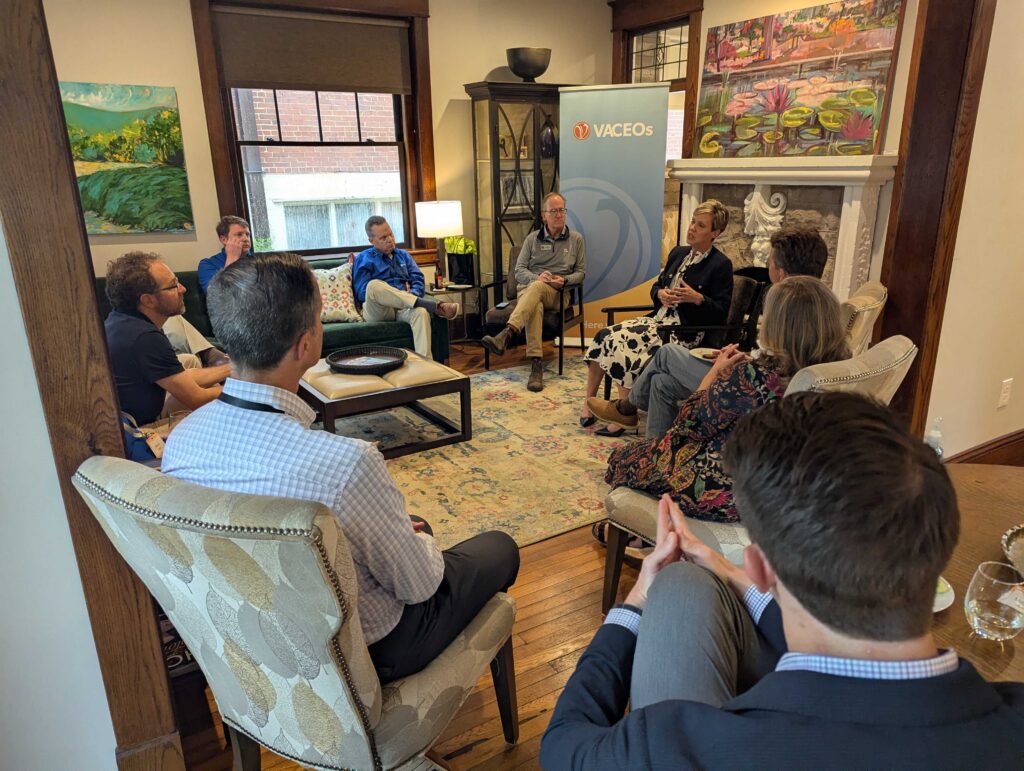
Contributed by Cathy Redford, VP of Business Development, Synergy Technical
At Synergy Technical, we’re working through AI adoption alongside our clients and within our own business. Our starting point isn’t which tool to buy. It’s what we can do with AI that makes a meaningful difference for our customers and helps our business grow.
Imagine two competitors buying the same AI tools. One uses the time saved to send more proposals. The other uses it to understand why customers hesitate and help them make better decisions.
This is an illustration, not a client comparison. But if your competitor can buy the same technology, where does your advantage come from?
I think it starts with what you know about your customers, the questions you’re willing to ask, and the choices you make with the time you get back.
The advantage is what only you know
Your company knows things that don’t come with a software license. Why does one customer value predictability more than speed? What signals tell your team that a project needs attention? Where does work that looks profitable become difficult to deliver? Some answers are in your system. Others live with people who’ve spent years building relationships and learning about your business.
AI can help us find and use that knowledge. It can’t replace the judgment required to connect it to a customer’s real concern. When I’m thinking about a technology investment, I want to know what problem we’re helping someone solve, not just what tools can produce.
Consider a customer asking for a lower price. Are they concerned about cost, or unsure if the investment will pay off? Is a slow decision about procurement, or does someone inside the organization still need convincing? A polished response won’t help much if we’ve answered the wrong question. That’s where listening and experience matter.
For me, this makes our team’s expertise part of the AI conversation from the beginning. We need to know which information we can rely on, whose experience should inform the answer, and who will review it. A confident answer isn’t necessarily a good one.
Trust matters just as much. We have to protect customer information, respect permissions, and be clear about where human review is required. Those aren’t details to address after the technology is in place. They’re part of delivering the service we promised. Faster isn’t better if it puts a relationship or someone’s confidential information at risk.
Optimize the outcome, not the task
Here’s another hypothetical: AI cuts proposal preparation from days to hours, but pricing approval still takes a week, and delivery can’t confirm availability. The customer is still waiting. We’ve made one task faster without making it easier for someone to move forward.
I’d rather ask: what would help this customer get a sound recommendation and a commitment they can count on sooner? The answer might involve bringing delivery into the conversation earlier, clarifying who can approve pricing, or reducing handoffs. AI can help, but it can’t settle who has permission to say yes.
That means looking at the whole journey, from the first conversation through delivery. Sales, finance, and delivery can each improve their own results while leaving the customer stuck between them. Someone needs responsibility for connecting those steps and the authority to change them. IT is essential to this work, but it can’t own every business decision.
And sometimes the right next step is another conversation, not an instant answer. Helping a client choose where to invest takes care, especially when the decision affects their people or their growth plans. I want technology to remove unnecessary waiting, not rush the judgment they’re trusting us to bring.
That’s also how I’d measure progress. Are customers making good decisions sooner? Are we reducing rework? Can we deliver what we sell? A faster first draft is useful, but those questions tell us much more about whether the investment is creating value.
Decide what you’ll do with the time
If AI genuinely frees up capacity, we have another choice to make. We could serve more customers, spend more time with existing ones, explore a new market, or help experienced colleagues develop newer team members.
Any of those could support growth. None happens simply because we report hours saved. We have to decide where that time will go and check whether it’s making a difference.
The CEO still owns the choice
The CEO doesn’t need to choose every tool or approve every experiment. But the CEO does need to be clear about what matters: which customer outcome we’re pursuing, what we’re willing to change, and what we’ll stop doing to make room. That includes being willing to end an initiative that creates plenty of output without improving the business.
As we work with clients and pursue our own internal initiatives at Synergy Technical, this is the question I want to keep in view. The goal isn’t to become a company that uses AI. It’s to become a company that delivers something more valuable because of it.
At your next leadership meeting, try this: If AI gave your team a day back each week, what would your customers get that they don’t get today? And who will make sure it happens?
Thank you to Cathy Redford for sharing her experience and perspective with the Virginia CEOs community. We’re also grateful to Synergy Technical for their support of VACEOs and for sharing their valuable expertise on the opportunities and decisions business leaders are navigating today.